
Learning the Pacific on its own terms
Australia is surrounded by the Pacific. Yet until now, there has been no place in Australia's senior secondary curriculum dedicated to understanding the region in all its diversity. From 2027, that changes.
ACT students will be the first in Australia to study a dedicated ACT Board of Senior Secondary Studies (ACT BSSS) Year 11 and 12 Pacific Studies course, bringing the region's histories, cultures, languages, knowledge systems and contemporary issues into the senior secondary curriculum.
The development of the course also draws on a longstanding tradition of Pacific scholarship at The Australian National University. The ANU College of Asia and the Pacific (CAP) has expertise across the languages, cultures, histories, societies and contemporary affairs of Asia and the Pacific. Within the School of Culture, History & Language (CHL), scholars have helped build and advance Pacific Studies at the tertiary level through research, teaching and engagement with Pacific communities.
Central to that work has been Professor Katerina Teaiwa, a pioneering Pacific Studies scholar whose work has helped advance the field in Australia and internationally. Her contribution to the development of the new course reflects a broader legacy of Pacific scholarship at ANU extending beyond the university to influence how the region is understood and taught more widely.
The Senior Secondary course marks a significant step for Pacific education in Australia but also responds to something more fundamental: a longstanding separation between the significance of the Pacific to Australia's future and the place it has traditionally occupied in Australian education.
For Pacific Islander students and their families, the course creates an opportunity to engage more closely with their heritage. For other students, it opens a window onto the extraordinary diversity of a region that stretches across one-third of the globe.
The impetus for this innovation came from the ACT education community, including teachers, families, and the ACT BSSS who recognised that Pacific students did not have the same opportunities as many other cultural groups to engage with their heritage through the senior secondary curriculum. With hundreds of languages spoken across the Pacific, language courses alone could never offer an equivalent pathway for Pacific students to explore the region in all its diversity.
ACT BSSS curriculum developers Kate Goolagong and Dr Murray Chisholm were key in turning the need into a new area of study. Working with teachers, academics, Pacific educators and community representatives across the ACT, they set out to create a course that could reflect the diversity of the Pacific while giving students meaningful and flexible ways to engage with it.
Pacific Studies invites students to see the Pacific through many different lenses. Rather than asking students to understand the Pacific through a single subject or lens, the course draws together history, geography, languages, politics, literature, art, culture and linguistics. That interdisciplinary approach is central to what makes Pacific Studies distinctive.
Students will be encouraged to consider complex questions from multiple perspectives, developing a more holistic understanding of the region while learning how different disciplines can contribute to understanding its societies and cultures.
Students will also be able to undertake inquiry using Pacific methodologies and ways of knowing, moving beyond simply learning about the Pacific to engaging with Pacific perspectives and knowledge systems. The course gives students scope to demonstrate their learning in ways that play to their strengths, while building capabilities in critical thinking, research, collaboration, problem-solving and intercultural understanding.
Those capabilities are important well beyond the classroom.
Australia's relationships with the Pacific are becoming increasingly valued across diplomacy, security, economics, education, sport and people-to-people connections. As those relationships deepen, so does the need for Australians who can engage with the region with knowledge, confidence and cultural understanding. This makes Pacific literacy a crucial part of the equation. Building the knowledge and intercultural understanding to engage respectfully with Pacific communities and nations is increasingly important across Australian society.
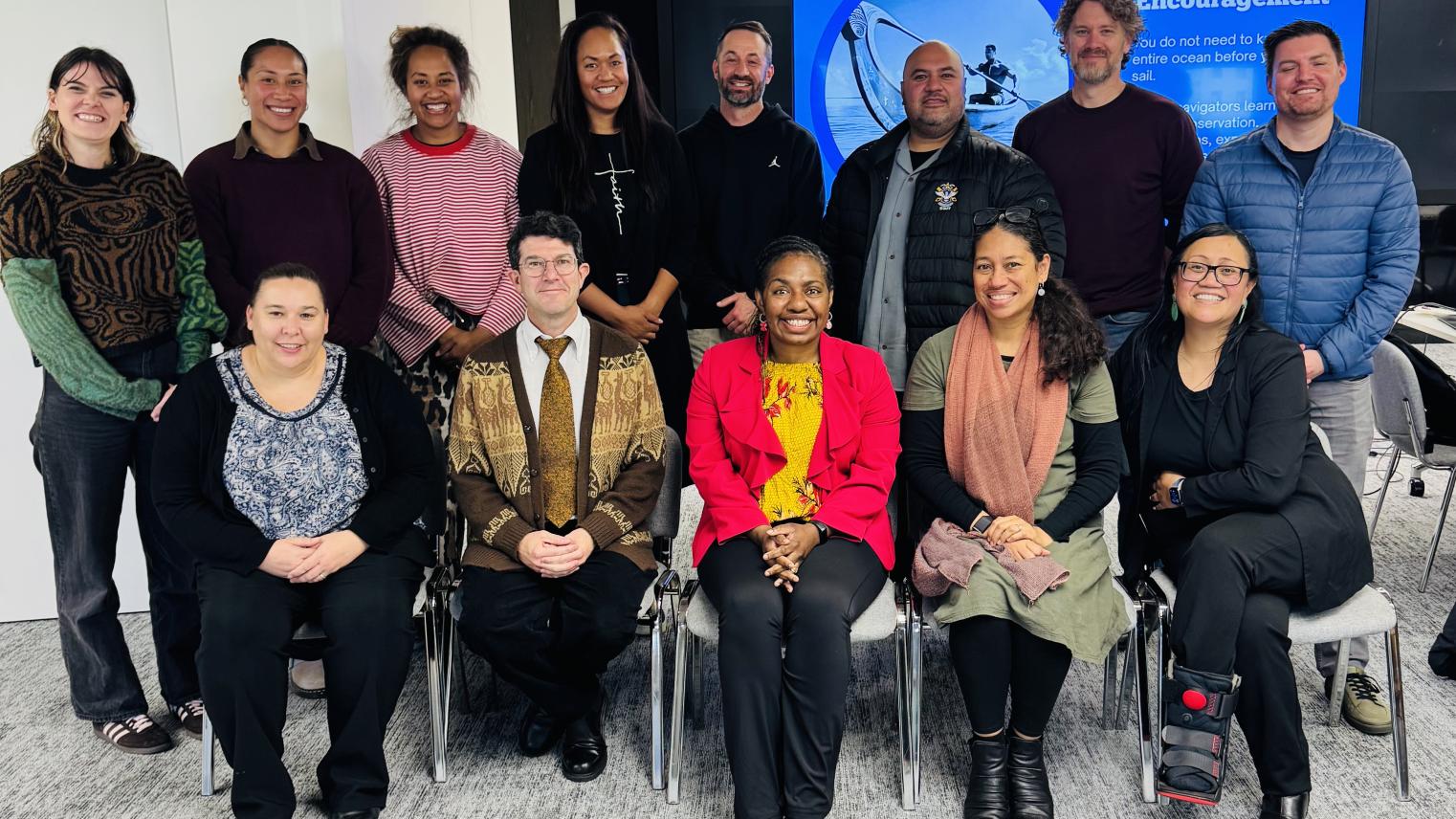
The course itself has been shaped by the type of collaboration that Pacific Studies demands. Teachers and academics from across the ACT contributed to its development, supported by their schools, while Pacific educators and community representatives helped ensure Pacific voices and knowledge systems were meaningfully embedded throughout.
The development team also worked closely with a Cultural Reference Group and an Accreditation Panel of Pasifika educators and community leaders to ensure the course was appropriate and culturally safe for senior secondary students. The result is a course designed to balance academic rigour with cultural authenticity and community connection.
The course represents more than a new course for ACT students. It is another step in bringing Pacific knowledge into spaces where it has historically been absent. It is also a recognition that the Pacific is more than a region that Australia relates to; it is a rich and diverse source of knowledge, perspectives and ways of knowing.
For Pacific and Pasifika students, that means seeing their histories, cultures and knowledge systems reflected in the classroom. For all students, it means developing the understanding needed to participate thoughtfully in Australia's increasingly Pacific future.
And for the first cohort beginning in 2027, it means a first for Australian senior secondary students with the opportunity to study the Pacific on its own terms.